domingo, 20 de diciembre de 2015

Viruses: are they our "new friends"?


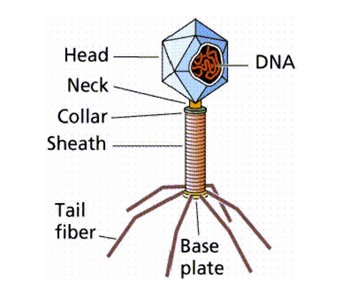
We have been fighting against bacteria through antibiotics, but bacterial resistance is an increasing concerning issue. For this reason, new lines of investigation are focusing in something that was discovered during the 20th century: bacteriophages (also called phages). Its name tells us everything: they eat bacterias (literally). 


How is the study going to be?

The first step is isolating natural phages from different environments. Then examine their activity against the main pathogen bacterias and finally test them as antibacterial agents in experimental animals.


However, some of the new studies are not based on complete phages, but by isolating some of their proteic components such as Tailokines and Lisines that are involved in fixation and breaking the bacterial cell wall, respectively. Both of them have lethal effects on the host and can be genetically manipulated to attack different bacterial varieties.


Which bacterial families have been selected as targets?

As mentioned before, those in which there's an increasing developing resistance against antibiotics. Some of them are:

  • Pseudomonas aeruginosa: responsible for severe lung and kidney infections. They are highly resistant to antibiotics
  • Staphylococcus aureus: commonly causes skin and respiratory infections. It's also the responsible for some intoxications. The increasing resistance to Vancomycin, gives us no more antibiotic options to those people suffering from VRSA
  • Clostridium difficile: causes a colitis type that's frequently resistant to antibiotics


Has this ever been studied before?
Yes. Some drugs have achieved clinical trials phase I (to determine if they are tolerated by the body) and phase II (to establish their efficacy in a small scale)


Which has been the more successful study?

It's known as PHAGOBURN and it's focused on the treatment of infections related with burns. It started in 2013 and is funded by the European Commission. In the project are involved Pherecydes Pharma (French biotechnology laboratories) and more than 10 hospitals from France, Belgium and Switzerland.


In fact, some drugs based on bacteriophages are already in the market, although they aren't used to treat patients, but to help food industry to avoid contaminations by E. coli O157:H7 and Listeria monocytogenes. In this case, regulatory procedures are faster and less exigent, since they do not precise clinical trials.


We'll have to wait until next year (June) to know the conclusion of Phagoburn. Would it be the beginning of a new era?


Bibliography:

El País: Este virus podría curarte [Internet]. Madrid: Javier Sampedro (10 de diciembre de 2015). Available from: http://elpais.com/elpais/2015/12/09/ciencia/1449684423_617874.htm


BLANCA CARRERAS 

sábado, 19 de diciembre de 2015

Preventing mistreatment of women during childbirth

Bad conditions and abuse during the labor is a common problem in many countries of the world. This affects both the mother and the baby. I have found a publication of WHO about this situation, particularly in Poland (not a very far place). Here there are some interesting parts of the article. I hope this will make us aware of the importance of taking care of the pregnant women and let them enjoy the childbirths and remember them as a happy experience.

Raising the voices of pregnant women in Poland

When Milena, a gynaecologist and obstetrician, began delivering babies more than 30 years ago in Poland, pregnant women did not have the right to choose how they gave birth, how to be supported by her partner in the delivery ward or share a room with her newborn.
Although Milena was a doctor, the birth of her own child lacked respect and dignity.
“When I was a birthing mum the ward closely resembled prison,” says Milena. “Being devoid of human support is a hugely stressful experience. I’m happy that now my memories are exactly that – memories.”

A campaign for change

Twenty years ago, as a response to a nationwide campaign entitled "Childbirth with dignity", Polish women began sharing their childbirth stories and advocating for respectful maternal care.
Lack of privacy, loneliness and inadequate support during birth were common themes. Most women experienced mandatory episiotomies, felt humiliated and had no choice in the administration of pain reliefs. Since babies were not rooming with their mothers after birth, breastfeeding rates were low.

 “Today more women are now enjoying their labour, they don’t feel so lonely anymore, labour is treated more as a family and intimate event. We believe it has influence on their first month at home making it easier and gentler for woman”. Infant mortality has improved: perinatal and maternal health in Poland has significantly improved since women began advocating for respectful care. Infant mortality has dropped from 1 in 66 in 1990, to 1 in 222 in 2013.


jueves, 10 de diciembre de 2015

By Marta Iris

'Es tiempo de volver a casa'
La soledad es la realidad que muestra este anuncio y el mensaje, que nunca es tarde para el reencuentro. El protagonista es un anciano que llega a casa con su perro, cargado de bolsas, y empieza a escuchar en el contestador los mensajes de sus hijos lamentando que no podrán pasar la Navidad con él. Están lejos, hay trabajo...
Día tras días, el señor sufre la misma soledad. Mientras cocina, ve cómo otros vecinos sí reciben la visita de sus nietos, mientras que él come solo, con el árbol de Navidad como única compañía.
De pronto, sus hijos reciben esquelas y llamadas. Sus fiestas se tiñen de luto... hasta que descubren que el anciano había fingido su muerte. "¿Tengo que hacer esto para veros a todos juntos?", dice, lo que da paso a un estallido de alegría. El anuncio termina con el deseo cumplido del protagonista: volver a disfrutar de una cena familiar.

By Damian

January exams are coming. A little nervousness before a test is normal and can help sharpen your mind and focus your attention. But with test anxiety, feelings of worry and self-doubt can interfere with your test-taking performance and make you miserable.

 Some people may take beta-blockers or other drugs, but here are some strategies that may help reduce your test anxiety rather than taking those:

 • Learn how to study efficiently. Your school may offer study-skills classes or other resources that can help you learn study techniques and test-taking strategies. You'll feel more relaxed if you systematically study and practice the material that will be on a test.

• Establish a consistent pretest routine. Learn what works for you, and follow the same steps each time you get ready to take a test. This will ease your stress level and help assure you that you're well-prepared.

 • Learn relaxation techniques. There are a number of things you can do right before and during the test to help you stay calm and confident, such as deep breathing, relaxing your muscles one at a time, or closing your eyes and imagining a positive outcome.

 • Don't forget to eat and drink. Your brain needs fuel to function. Eat the day of the test and drink plenty of water. Avoid sugary drinks such as soda pop, which can cause your blood sugar to peak and then drop, or caffeinated beverages such as energy drinks or coffee, which can increase anxiety.

• Get some exercise. Regular aerobic exercise, and exercising on exam day, can release tension.

 • Get plenty of sleep. Sleep is directly related to academic performance. Preteens and teenagers especially need to get regular, solid sleep.

 • Talk to your teacher. Make sure you understand what's going to be on each test and know how to prepare. In addition, let your teacher know that you feel anxious when you take tests. He or she may have suggestions to help you succeed.


jueves, 3 de diciembre de 2015

1st OF DECEMBER, WORLDS AIDS DAY

As we  were talking about antiviral drugs yesterday, I wanted to share this video from a project in order to finish with the stigma related to AIDS from doctors without borders. Also, remind you that the 1st of december was the world's day against AIDS.


https://www.youtube.com/watch?v=886FEUzsy1A

If you were wonderful once, you can be it again.

"The best thing to do when you're discouraged is to watch what you've got, because you already did. You forget that you are smarter than you believe, stronger than you think and even more handsome. Nothing like review the things that one day you did to lift the mood and laughing about the biggest challenge."

Ánimo!

lunes, 23 de noviembre de 2015

STRESS EFFECTS

Whether you’re stuck in traffic, on a job interview, or on a first date, you’re most likely to experience an unavoidable and toxic degree of stress. This short-term frustration can evolve into long-term agony, leading to psychological and physical stress yielding the common health problems such as heart disease and type 2 diabetes. However, stress affects the entire human body in the most unexpected ways.
A national poll conducted by National Public Radio (NPR) in conjunction with Robert Wood Johnson Foundation and Harvard School of Public Health found more than one in every four Americans say they had a great deal of stress in the previous month. Moreover, half of all adults, or more than 115 million people, say they experienced a major stressful event in the past year. However, this poll only captures the stress people are conscious of and not the “hidden” stress that can affect our ability to balance the big and little problems in life. This cognitive impairment not only deteriorates our mental health but our physical well-being.
Although stress can be a positive force motivating you to perform well and outdo yourself, it can also be a negative force that can become chronic. Stress can weaken your immune response and make you more susceptible to infectious diseases and other ailments. To avoid stress from interfering with your ability to live a normal life, beware of these surprising stress-induced health issues.

1. Shrunken Brain Tissue

Stress can have a significant toll on your mental health. Chronic stress can reduce the amount of tissue in areas of the brain that regulate emotions and self-control. A 2012 study published in the journal Biological Psychiatry found stress shrinks the brain and lowers a person’s ability to cope with adversity. The participants showed smaller gray matter in their brains in the prefrontal cortex — a region that is responsible for self-control, emotions, and physiological functions like regulating glucose and insulin levels. However, chronic stress doesn’t affect brain volumes on its own. This is because chronic stress may wither away parts of the brain gradually, so it’s not noticeable, but it is enough to magnify its effects and compromise our ability to cope.

2. Colds

Your susceptibility to catching a cold significantly increases if you have ongoing psychological stress in your life. Stress has the ability to alter the levels of certain biochemical markers in the body — essential for the immune system — compromising a person’s immune response. A 2012 study published in the journal Proceedings of the National Academy of Sciences of the United States of America found the immune systems of those who were stressed were less sensitive to cortisol. This allowed a part of the immune reaction, the inflammatory response, to grow and lead to symptoms of a cold. The inflammatory response feeds off the stress.

3. Memory Loss 

Acute or severe stress can interfere with the brain’s ability to recollect and form new memories. Cortisol affects neurotransmitters by reducing synapses that house short-term memory. A 1998 study published in the journal Nature found after 30 minutes of being stressed by an electrical shock, rats were unable to remember their way around a maze. When the shock was given two minutes or four hours before going through the maze, the rats had no problem. The researchers realized when glucocorticoid production was chemically suppressed, there were no stress-induced effects on memory retrieval.
"This effect only lasts for a couple of hours, so that the impairing effect in this case is a temporary impairment of retrieval. The memory is not lost. It is just inaccessible or less accessible for a period of time,” said James McGaugh, director of the Center for the Neurobiology of Learning and Memory at the University of California at Irvine, according to the University of Texas Medical Branch.

4. Premature Labor

Stress can not only affect the ability to get pregnant, but it can increase the risk of going into premature labor. The emotional state of a pregnant mother may affect her unborn child. Maternal stress and anxiety during pregnancy have both immediate and long-term effects on her offspring. A 2013 study published in the journal Psychoneuroendocrinology found inflammation and elevated free cortisol during pregnancy are tied to preterm birth, hypertension, diabetes, preeclampsia, miscarriage, and other adverse outcomes. High levels of stress during pregnancy for minority and low-income women may help explain higher rates of preterm labor, according to the study.
The cytokine-cortisol feedback cycle limits the production of inflammatory mediators and is what helps everyone control their inflammation. However, the feedback cycle of people with chronic stress stops responding to cortisol because of the consistently high levels of the hormone. This leads to the dysregulation of inflammation and cortisol.

5. Sex Appeal

Stress can not only give you physical and mental fatigue but also kill your sex appeal. The reason why women favor “masculine” men may have less to do with their looks and more to do with their powerful immune systems. Researchers have found the link between testosterone, immune strength, and attractiveness was most significant in men who have the lowest levels of cortisol, according to a 2012 study published in the journal Nature. This suggests a man’s high stress levels may interfere with his sex appeal, making him less attractive to women.
The Mi Bella Reina – Beyond Beauty infographic below will help you visualize the triggers of stress, how it affects your health, and what you can do to reduce stress.